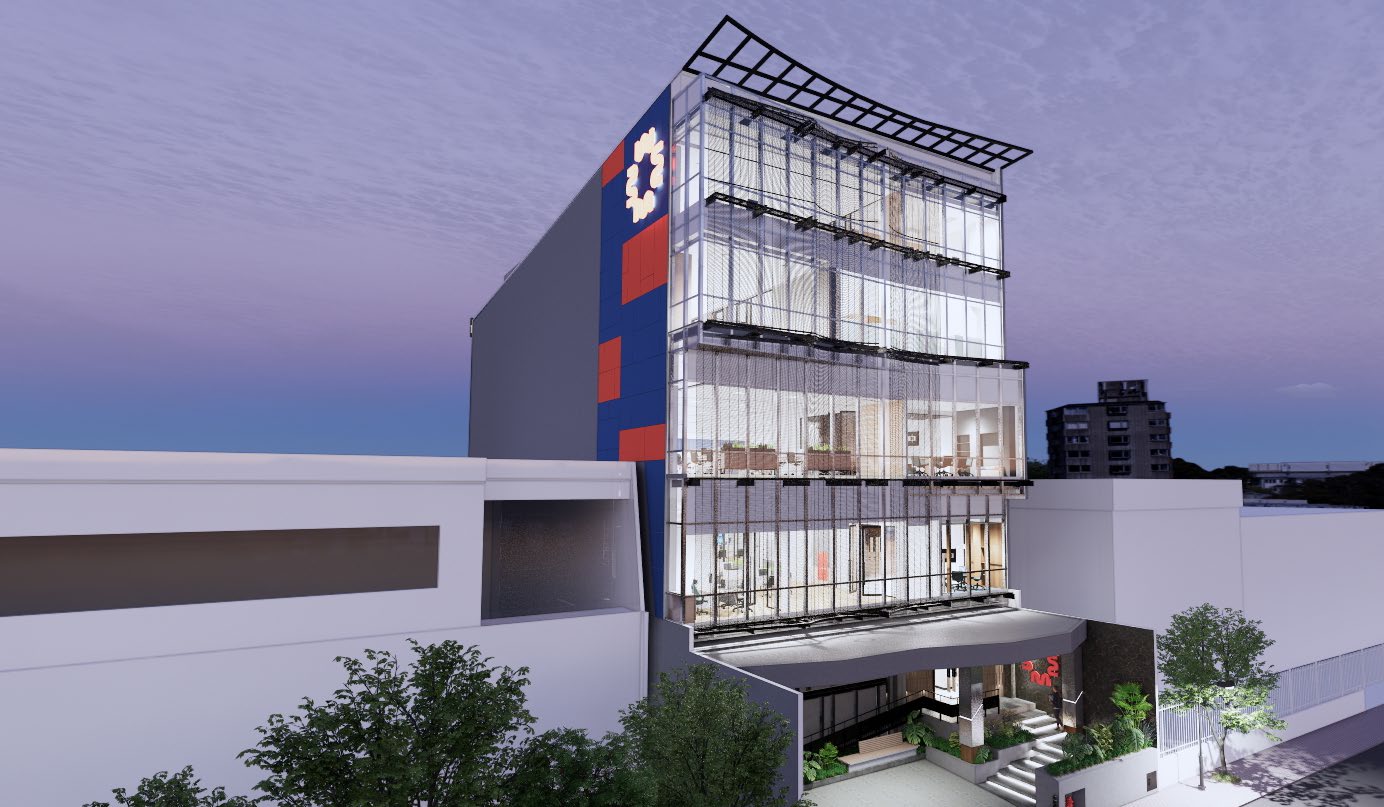
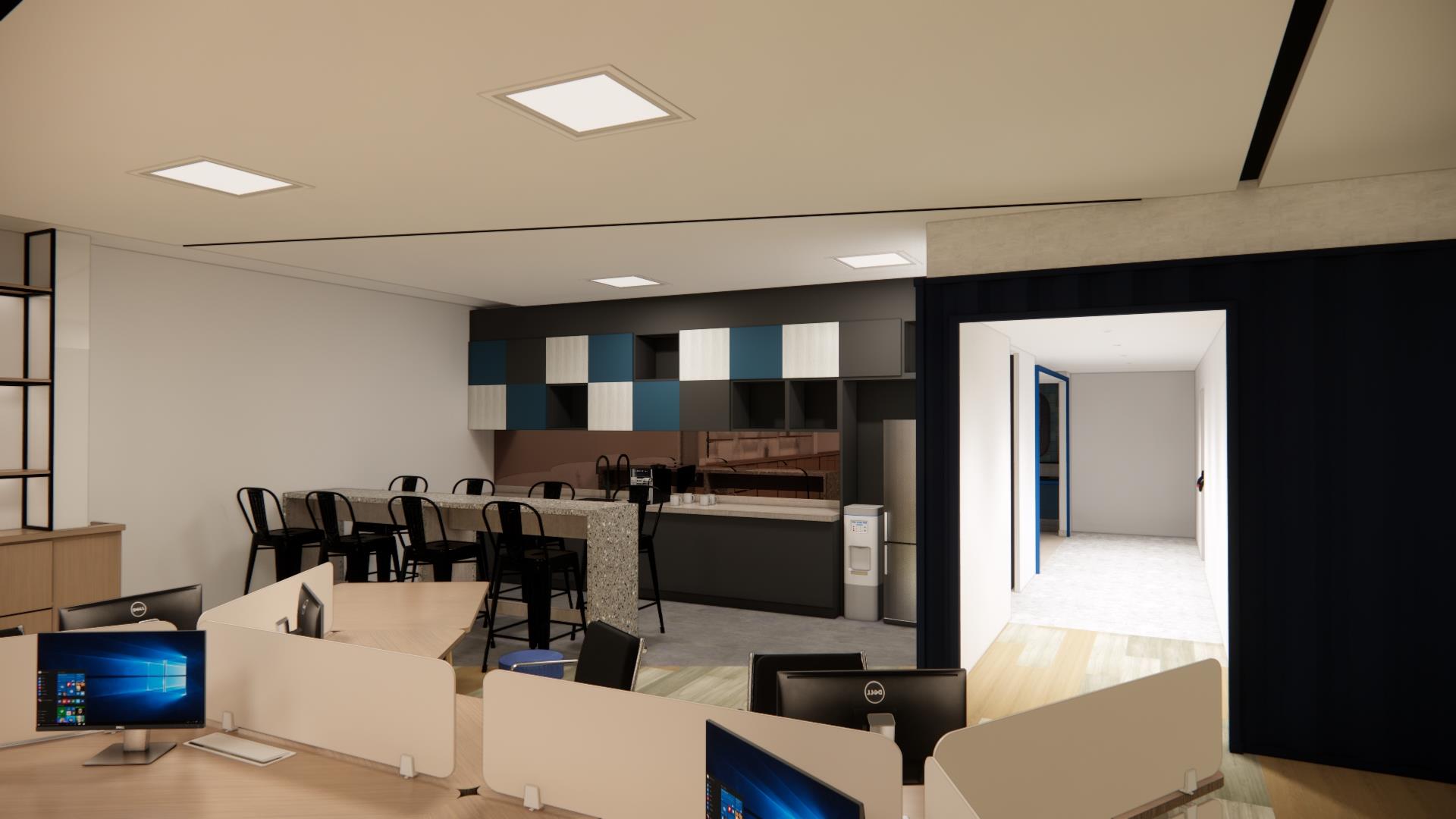
How do you design a four-floor office to remain efficient without feeling rigid? Rather than relying on a completely open floorplan, the layout adopts a more structured open-plan approach where workstations are grouped and subtly separated to create clearer working zones for each team. This allows the office to remain visually connected while still giving employees a stronger sense of focus, structure, and privacy within the larger shared environment.
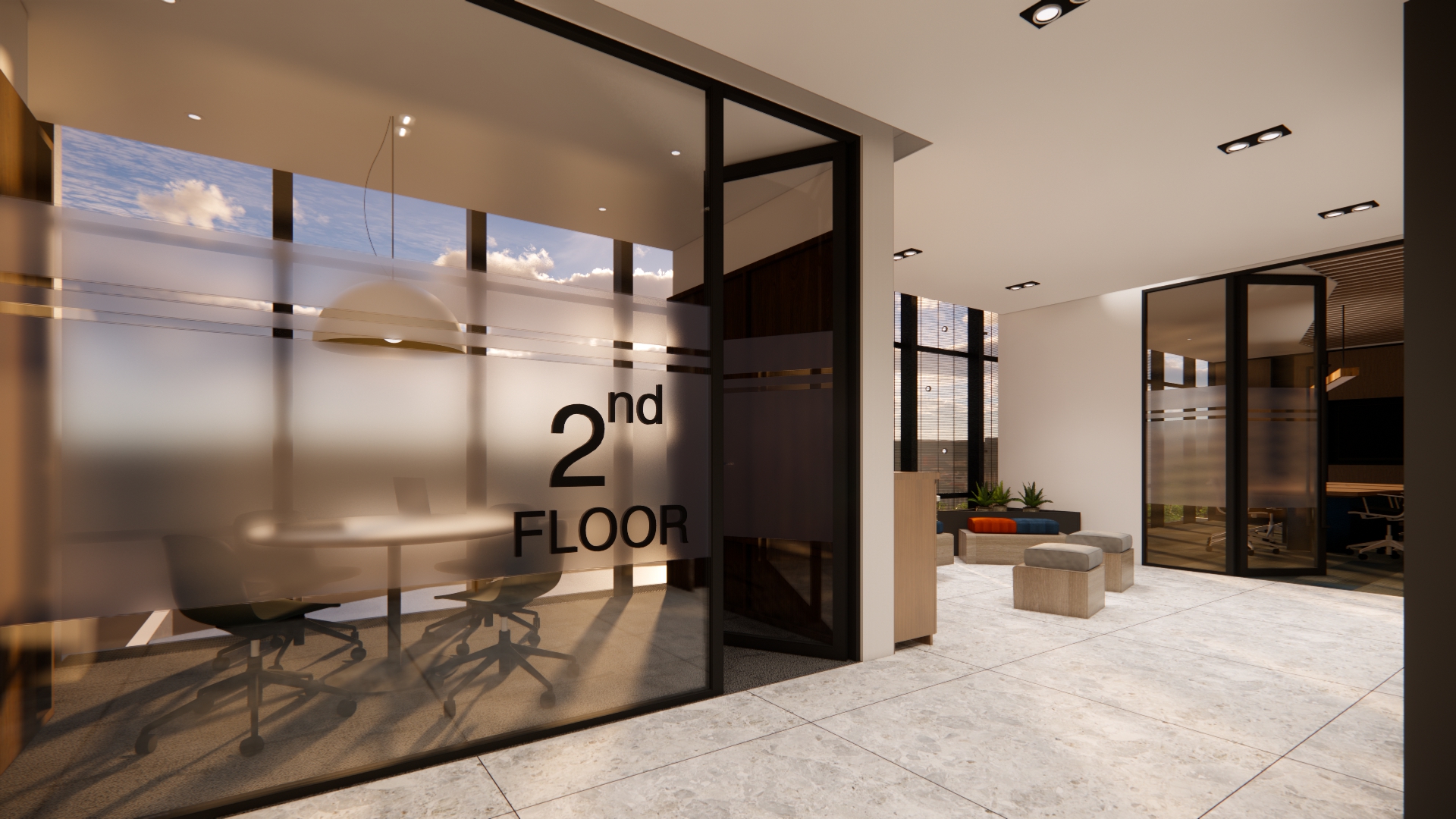
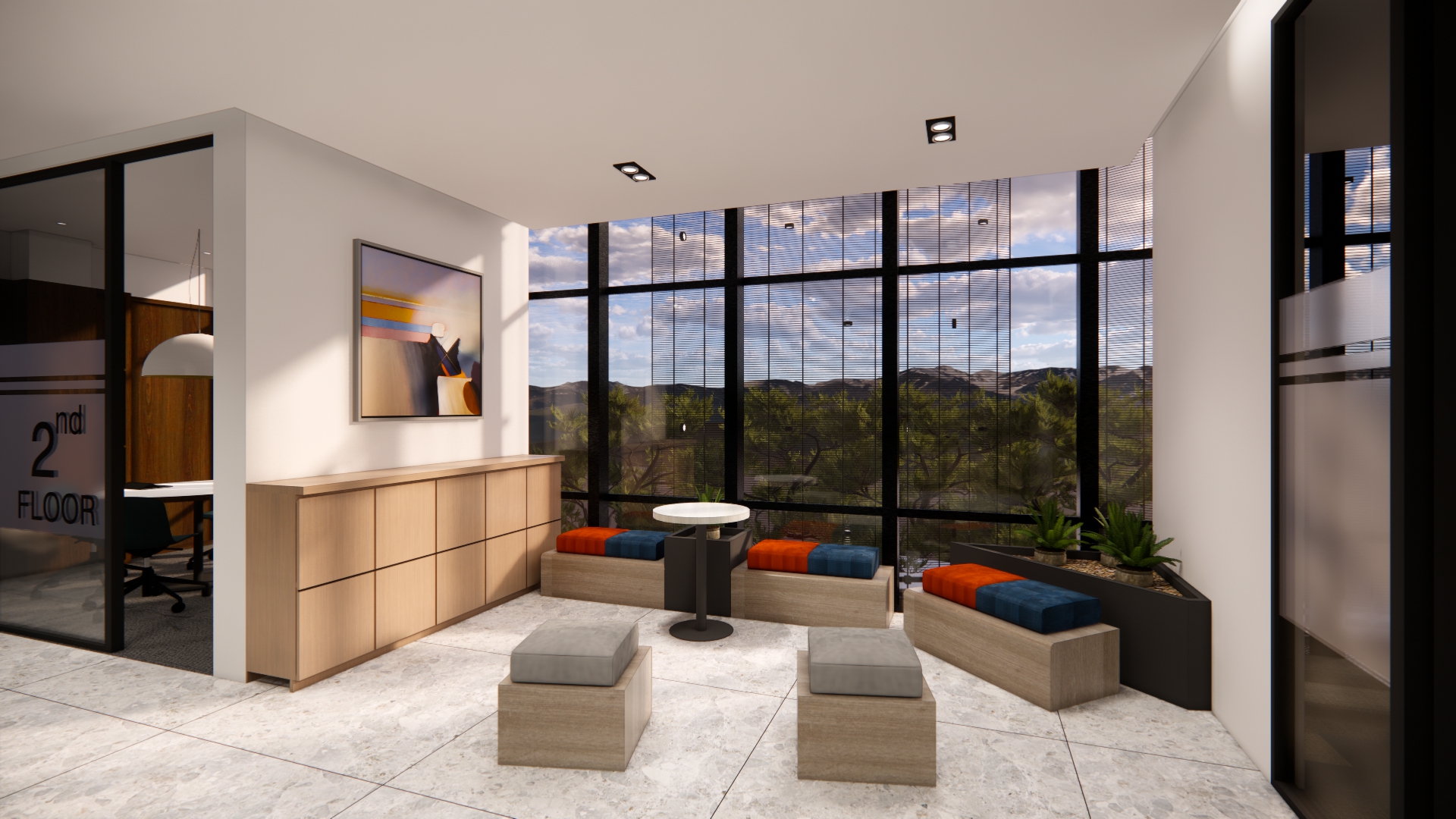
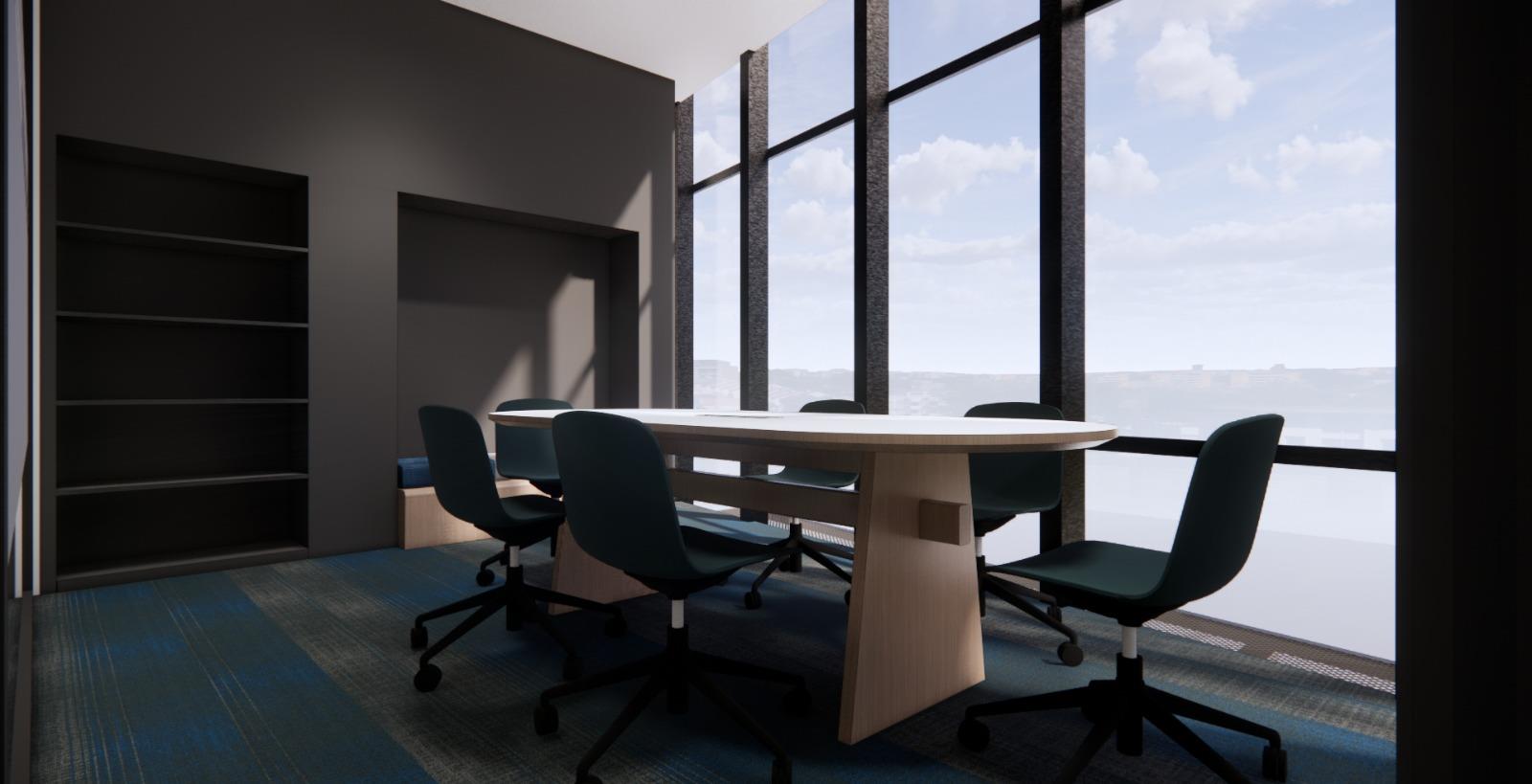
Across each floor, meeting rooms, breakout areas, and informal gathering spaces are integrated into the layout to support different styles of working. Kitchen and pantry areas are positioned as shared social spaces rather than secondary amenities, reinforcing the importance of workplaces providing a balance between work, rest, and social connection.
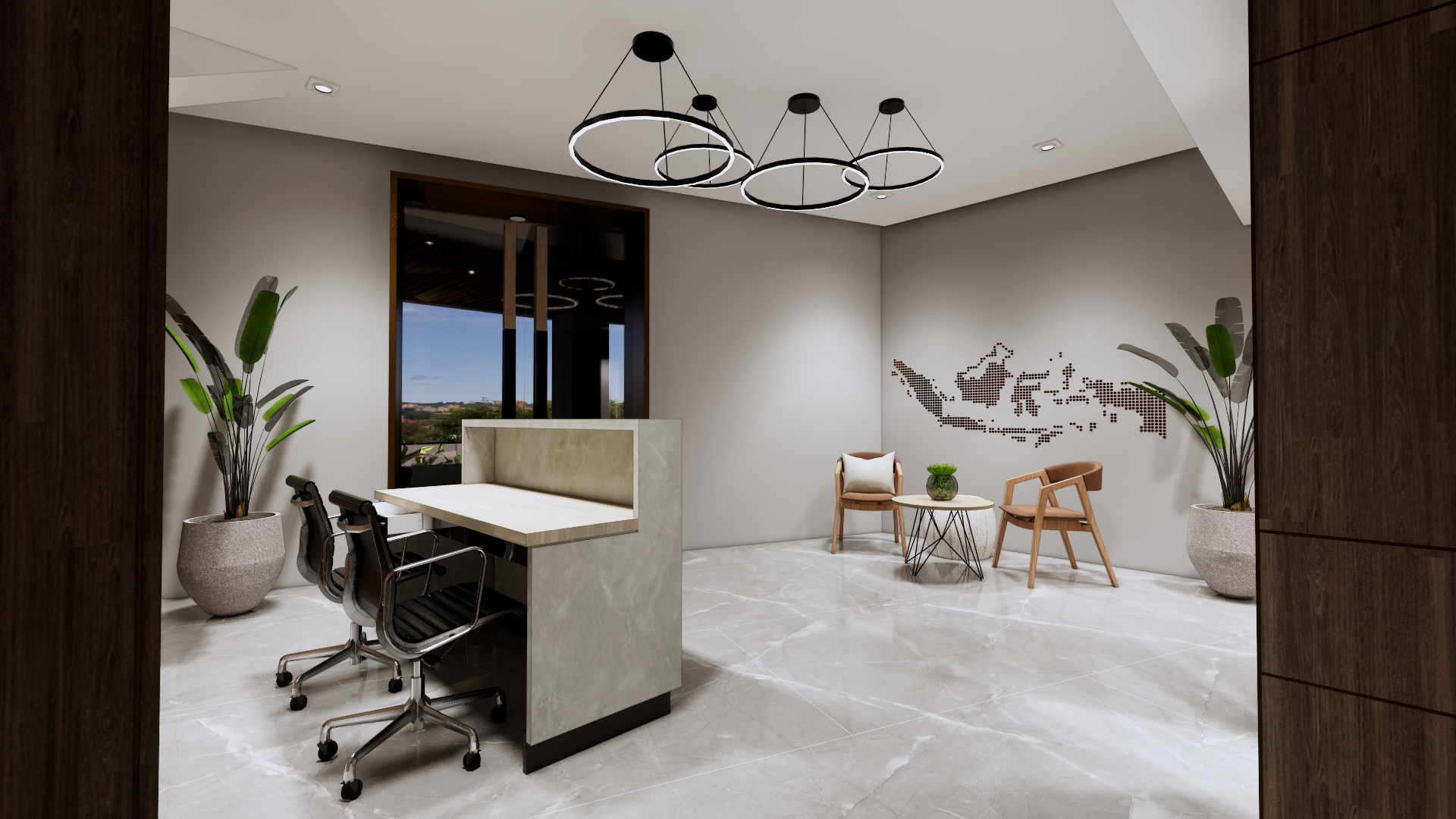
Glass partitions are used extensively throughout the office to maintain openness between spaces while allowing natural light to reach into the interior. Wood finishes and softer neutral tones help balance the more corporate character of the workspace, creating an environment that feels professional without becoming overly formal. Spatial planning was approached with equal consideration—ensuring meeting rooms, lounge areas, and workstations function cohesively together while maximizing the available space without making the office feel dense or overcrowded.
Rather than treating the office as a purely functional environment, the project focuses on creating a workplace that feels adaptable, organized, and comfortable to work in over time.