
When working with an established brand, the challenge is rarely about creating something new. It’s about knowing which elements of the brand should remain unchanged and which can be reinterpreted—allowing each space to feel both familiar and distinct.
BPA was entrusted with the construction of seven Solaria branches. The goal was to build a consistent spatial identity across multiple locations, while allowing each one to provide its own unique experiences. For a well-known family brand, familiarity matters but repetition, if left unchecked, quickly becomes forgettable.
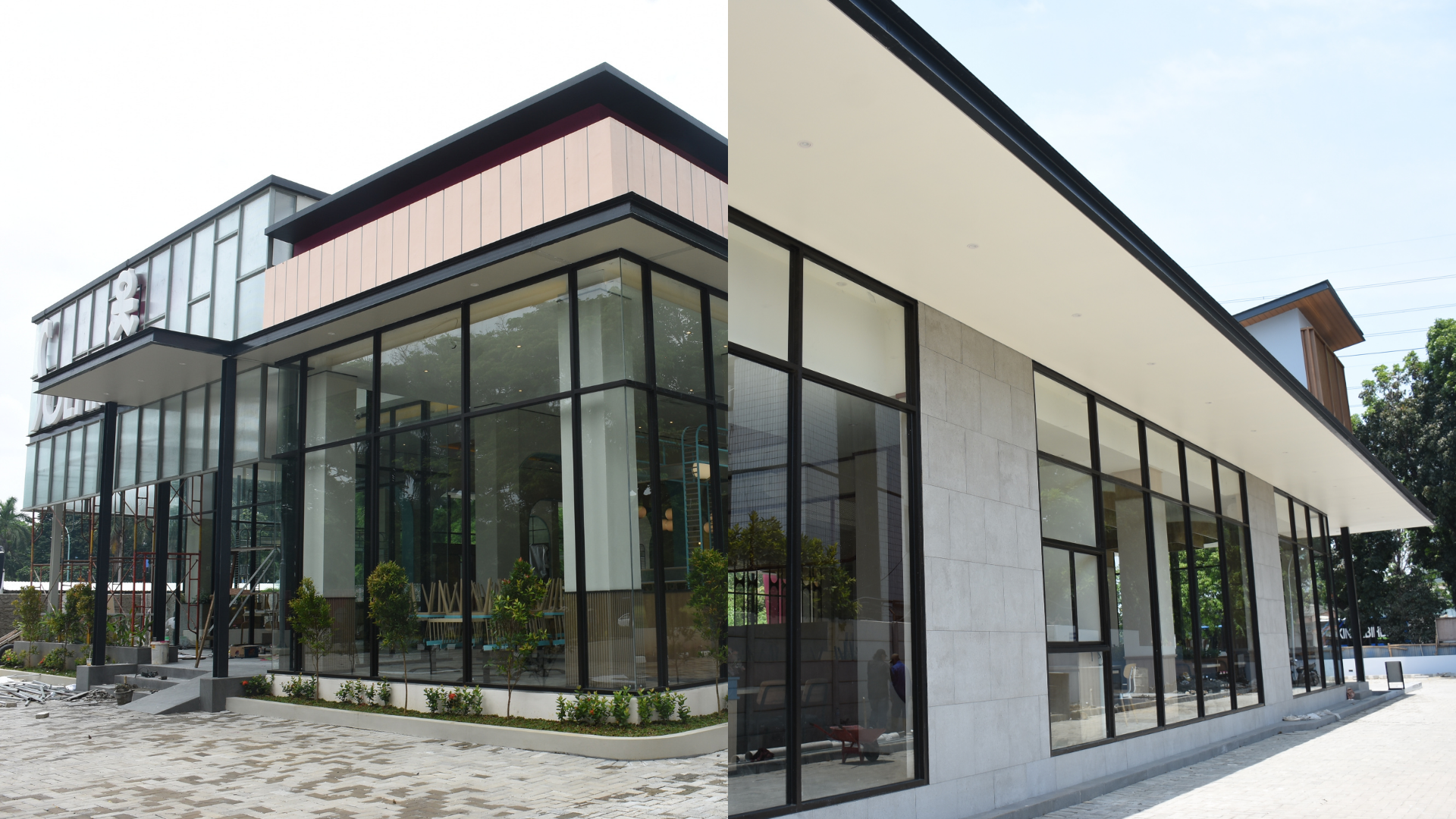
Thus, each outlet is built to be immediately recognizable, not through excessive gestures, but through a controlled and consistent design approach. The exterior is kept simple and legible, allowing the brand to take the lead. It doesn’t try to compete with its surroundings—it positions itself clearly within them. Across locations, glass is used as a tool for transparency and credibility. By revealing the activity inside, the building invites people in before they even step through the door. Light spills outward, movement becomes visible, and the restaurant feels open rather than enclosed – an experience to be shared.
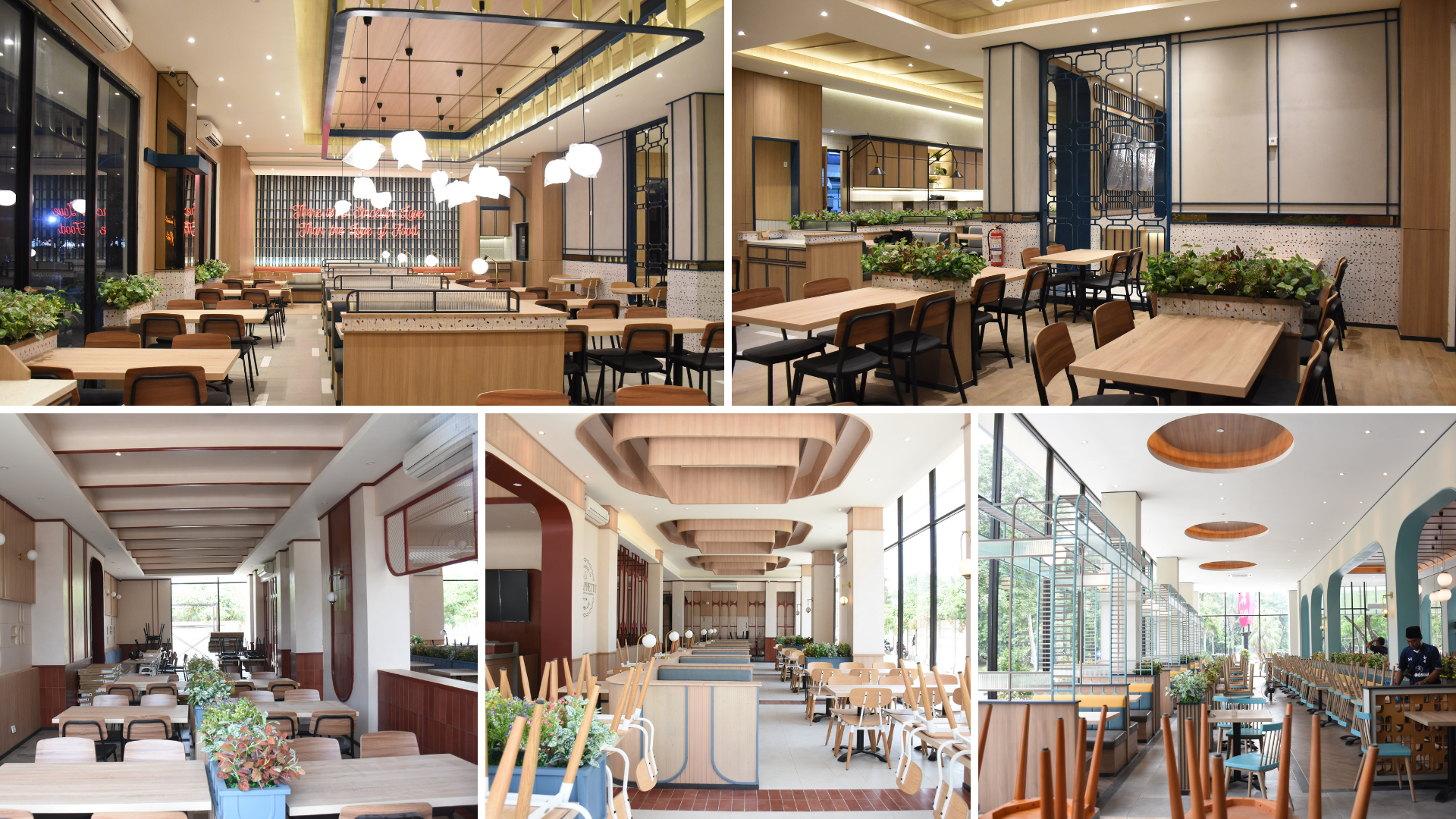
Inside, the focus turns to performance. Restaurants operate at a different pace than most environments, and the design has to support that. Layouts are carefully organized to handle high volumes of customers without feeling crowded. Circulation paths are straightforward to allow customers and staff to move through the space with ease, seating is arranged to maximize capacity without sacrificing comfort, and every decision is made with both customer experience and operational flow in mind. Rather than relying on a single uniform layout, the dining areas are subtly layered. Open seating is balanced with more defined zones, creating a range of spatial conditions within a relatively compact space. This allows the space to feel varied without becoming complicated.
Material and atmosphere become the bridge between consistency and individuality. A core palette—warm wood finishes, controlled lighting, and selective color accents—anchors each outlet within the same identity. From this foundation, subtle variations are introduced. A change in pattern, a different ceiling design, or a variation in spatial rhythm is often enough to give each location its own character. Lighting, in particular, plays an important role in shaping the atmosphere – adding depth, softness, and a more comfortable dining environment.
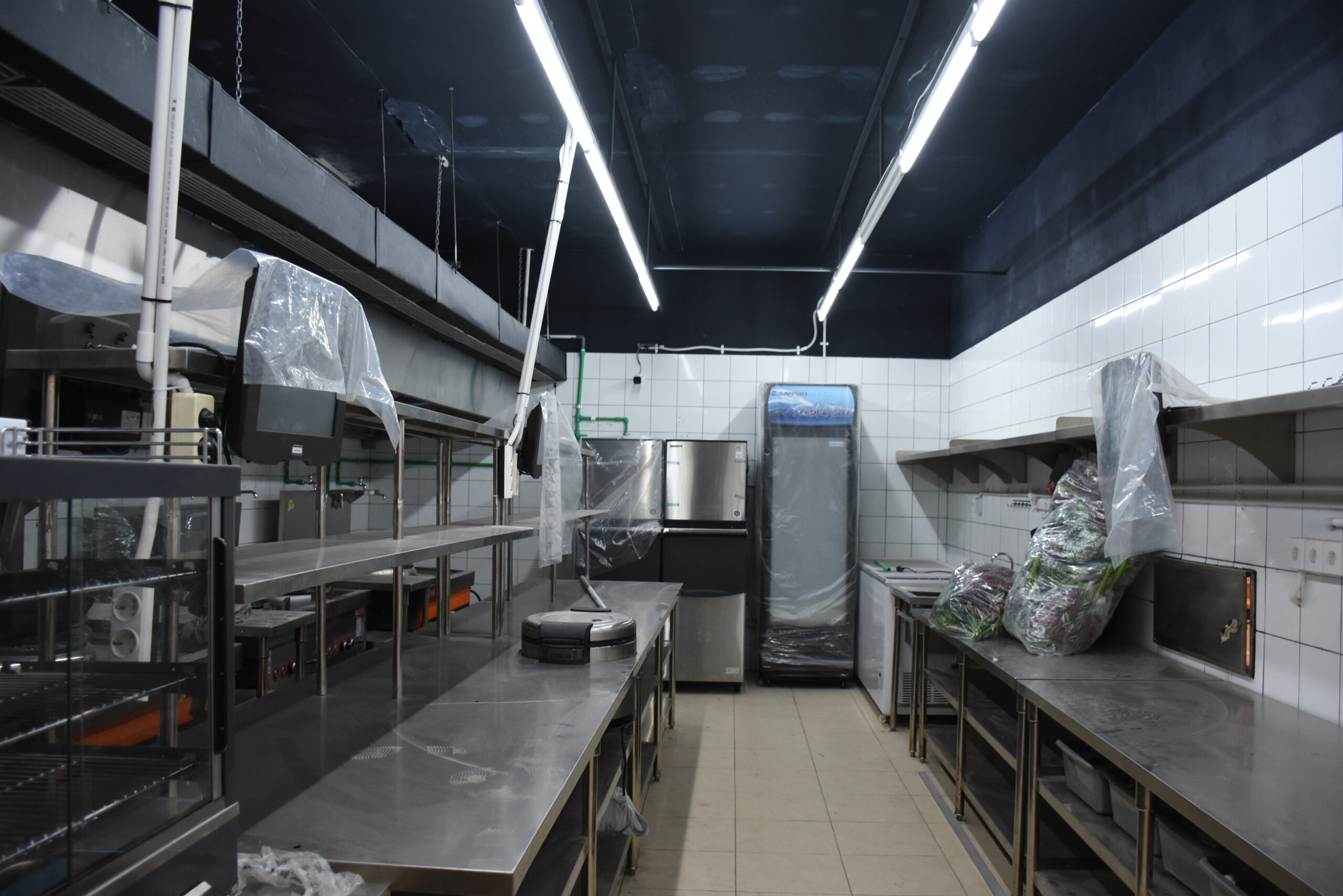
Behind the scenes, the same level of attention is applied. Kitchens are designed around workflow, hygiene, and long-term usability. Equipment placement, circulation, and preparation zones are all considered to support speed and coordination. How the brand is experienced ultimately depends on how well these systems perform. Efficient kitchens support consistency, speed, and reliability—ensuring the overall experience lives up to the brand’s promise.
Ultimately, designing for a brand is a balance between expression and discipline. Each space should feel distinct, but never disconnected from the identity it represents. A successful design is not only visually considered, but also enables consistency, efficiency, and a reliable experience across every location. Because consistency isn’t about making everything the same—it’s about knowing what should stay, and what can change.